
Type 2 Diabetes Reversal Plan
Type 2 diabetes is not just a “high sugar problem.” It is largely a metabolic and hormonal condition driven by insulin resistance. Check the plan and contact us to get sure results.
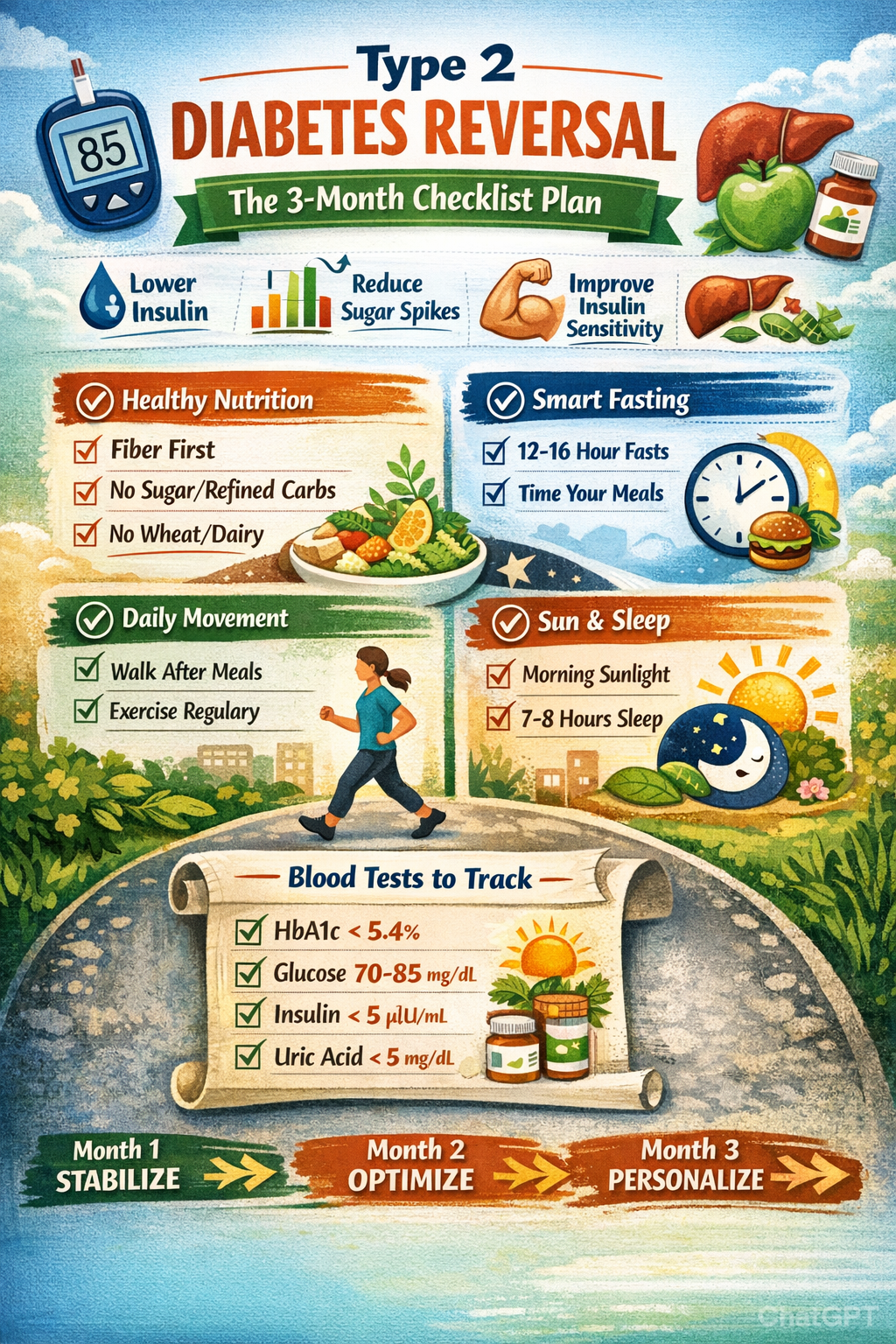
Type 2 Diabetes Reversal: The Complete 3-Month Checklist Plan to Improve Blood Sugar, Insulin & Metabolic Health
A Different Way to Look at Type 2 Diabetes
Type 2 diabetes is not just a “high sugar problem.” It is largely a metabolic and hormonal condition driven by insulin resistance.
When insulin remains high for years:
The body stores more fat
Cells stop responding to insulin
Blood sugar rises
Fatty liver often develops
Many modern doctors and researchers now focus on lowering insulin and stabilizing glucose as a path toward diabetes improvement and possible remission.
This approach is inspired by ideas discussed in:
Glucose Revolution by Jessie Inchauspé
Why We Get Sick by Benjamin Bikman
Drop Acid by David Perlmutter
Death by Prescription by Ray Strand
Wheat Belly by William Davis
Lifestyle-based diabetes control is also promoted by physicians like Pradeep Jamnadas and David Unwin.
Core Targets of a Diabetes Reversal Plan
Lower Fasting Insulin
Target: Below 5 µIU/mL
High insulin is strongly linked to fat storage and insulin resistance.
✔ Reduce Sugar Spikes
Large glucose spikes push the body to convert excess sugar into fat and worsen resistance.
✔ Reverse Insulin Resistance
This is the real root issue in type 2 diabetes.
✔ Support Liver Health
Around 85% of people with type 2 diabetes have fatty liver, which worsens glucose control.
A Powerful Fact About Blood Sugar
The human body has about 5 liters of blood, and at any moment it can safely hold only about 5 grams of glucose (roughly one teaspoon).
When we frequently overload this system with high-carb and sugary meals, the body must work hard to store or clear the excess—mainly using insulin.
The Complete Diabetes Reversal Checklist
Use this as a daily and weekly guide.
NUTRITION CHECKLIST
☐ Reduce sugar and refined carbs
☐ Avoid sugary drinks and fruit juices
☐ Limit ultra-processed foods
☐ Reduce wheat-based foods
☐ Moderate or avoid dairy if it spikes glucose for you
☐ Focus on whole, real foods
FOOD SEQUENCE (Very Effective)
☐ Eat fiber/vegetables first
☐ Protein and fats second
☐ Carbs last
BREAKFAST STRATEGY
Your first meal sets your insulin tone for the day.
☐ Choose high-protein breakfasts
☐ Avoid sugary cereals and bakery foods
☐ Keep breakfast low in sugar
Examples
Eggs and vegetables
Nuts and seeds
Protein smoothie without sugar
This order can reduce glucose spikes significantly.
FOOD TIMING CHECKLIST
Food timing is one of the most important factors.
☐ Try 12–16 hour intermittent fasting (if medically safe)
☐ Avoid late-night eating
☐ Keep consistent meal times
☐ Reduce frequent snacking
MOVEMENT CHECKLIST
☐ Walk 10–20 minutes after meals
☐ Stretch after eating
☐ Stay physically active daily
Calf muscles help absorb glucose and can reduce post-meal sugar load.
HORMONES & CIRCADIAN RHYTHM
☐ Get morning sunlight
☐ Sleep 7–8 hours
☐ Reduce late-night screen exposure
☐ Maintain a regular sleep-wake cycle
Circadian rhythm strongly affects insulin and metabolism.
HERBS & SUPPLEMENTS
(Only with professional guidance)
☐ Magnesium (linked to improved insulin sensitivity)
☐ MCT oil (supports ketone production)
☐ Doctor-guided herbal support if needed
BLOOD PARAMETERS TO MONITOR
Discuss with your doctor:
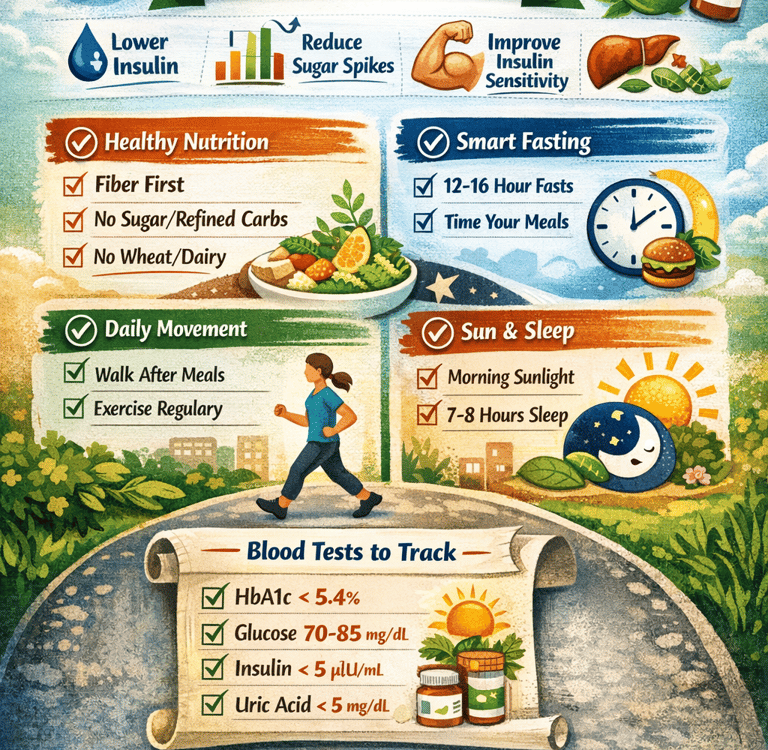
☐ HbA1c: ~5.0–5.4% often considered optimal
☐ Fasting glucose: 70–85 mg/dL commonly suggested
☐ Fasting insulin: below 5 µIU/mL
☐ HOMA-IR: below 2
☐ Uric acid: lower levels linked to metabolic health
☐ ALT/AST: indicators of liver health
☐ Thyroid (optional but useful)
The 3-Month Reversal Roadmap
Month 1 — Foundation
☐ Remove sugary drinks
☐ Start walking after meals
☐ Improve sleep
☐ Reduce processed foods
Month 2 — Optimization
☐ Add intermittent fasting
☐ Follow food sequence
☐ Increase protein and fiber
☐ Reduce wheat and refined carbs
Month 3 — Personalization
☐ Track glucose response to foods
☐ Adjust fasting window
☐ Recheck lab markers
☐ Fine-tune diet and routine
Research & Clinical Insights
Some large diabetes trials have shown that simply lowering sugar with medication does not always reduce heart risk. Meanwhile, many clinicians emphasize that diet and lifestyle can be extremely powerful tools for blood sugar control.
Educational talks and clinical experiences from doctors like Dr. Jamnadas and Dr. Unwin highlight how food-based strategies can dramatically improve glucose control in many patients.
Balanced View
This is not about “anti-medicine.”
Medication can be essential and life-saving.
The best outcomes often come from:
✔ Medical supervision
✔ Smart nutrition
✔ Movement
✔ Sleep and circadian alignment
✔ Long-term consistency
Final Takeaway
Type 2 diabetes improvement is about fixing metabolism—not chasing sugar numbers alone.
Small daily actions compound:
Walking after meals
Eating in the right order
Timing your meals
Sleeping better
Supporting liver health
Over time, these habits can significantly improve insulin sensitivity and blood sugar control.
References :
1. ADOPT 2004 : LOWER BLOOD SUGAR BY MEDICINES INCREASE RISK OF HEART FAILURE (DR PRADEEP JAMNADAS (TRIAL 5047 PARTCIPANT, 5 YEAR STUDY)
2. FOOD IS MORE EFFECTIVE THAN MEDICINESIN CONTROLLING SUGAR (U TUBE : REVESRE DIABETESE)
DR UNWIN : FOOD-SUGAR CHART